Saturday, July 18, 2026

Can Expressive Arts Therapy Help Anxiety? | East-West Center for Counselling and Training


Conversations on Healing

with Dr. Magdalene Jeyarathnam

"A space to explore creativity, relationships, emotional wellbeing and the courage to become more fully ourselves."


Conversation #4

Can Expressive Arts Therapy Help Anxiety?

Finding calm through creativity, connection and self-expression.

Does Anxiety Feel Like It Never Switches Off?

Anxiety can affect our thoughts, body and relationships. Racing thoughts, muscle tension, poor sleep and constant worry are common experiences. Although anxiety feels overwhelming, it is an experience—not your identity—and with support it can change.

Why Talking Is Sometimes Not Enough

Anxiety is experienced not only in our thoughts but also in our bodies. Expressive Arts Therapy invites the whole person into the healing process through creativity, movement, imagination, storytelling, music and reflection.

How Expressive Arts Therapy Can Help

Creative expression provides a safe way to explore emotions that may be difficult to explain. Painting, movement, music, role-play, poetry and storytelling become pathways to understanding, emotional regulation and hope.

Five Ways Creativity Supports Healing

• Calms the nervous system.
• Gives emotions a safe form of expression.
• Creates distance from overwhelming feelings.
• Increases self-awareness.
• Restores hope and new possibilities.

Research and Practice

Research in creative arts therapies suggests benefits for emotional regulation, stress reduction and psychological wellbeing. Therapy is most effective when guided by a qualified professional and integrated into an individual's overall care.

From the Practice of Dr. Magdalene Jeyarathnam

A participant once described her anxiety as 'a room full of buzzing bees.' During a creative exercise she added a small patch of bright yellow to the picture. When asked about it, she replied, 'That's the window. I'd forgotten there was one.' The anxiety had not disappeared, but hope had become visible. Creativity often helps us discover possibilities that anxiety hides.

A Question to Carry With You

If your anxiety could be expressed through a colour, a piece of music or a story, what would it look or sound like? What might it be asking you to notice?


More information about the first Expressive arts therapy diploma in India: https://www.centerforcounselling.org/portfolio/diploma-in-expressive-arts-therapy/

10 Benefits of an Expressive Arts Therapy Session | East-West Center for Counselling and Training


Conversations on Healing

with Dr. Magdalene Jeyarathnam

"A space to explore creativity, relationships, emotional wellbeing and the courage to become more fully ourselves."


Conversation #3

What Are 10 Benefits of an Expressive Arts Therapy Session?

Discovering healing through creativity, imagination and human connection.

Have You Ever Wondered Why Creativity Can Feel So Healing?

Many people leave their first expressive arts therapy session saying they feel lighter, calmer or more hopeful. The change does not come from creating perfect artwork. It comes from giving thoughts, feelings and experiences a safe place to be expressed.

1. Helps express emotions that are difficult to put into words.

Every benefit emerges through a carefully facilitated therapeutic process. The emphasis is not on artistic ability but on using creative expression to discover meaning, increase emotional awareness and explore new possibilities for living.

2. Reduces stress and anxiety by slowing the mind and engaging the senses.

Every benefit emerges through a carefully facilitated therapeutic process. The emphasis is not on artistic ability but on using creative expression to discover meaning, increase emotional awareness and explore new possibilities for living.

3. Improves self-awareness through creative reflection.

Every benefit emerges through a carefully facilitated therapeutic process. The emphasis is not on artistic ability but on using creative expression to discover meaning, increase emotional awareness and explore new possibilities for living.

4. Builds confidence by encouraging curiosity instead of perfection.

Every benefit emerges through a carefully facilitated therapeutic process. The emphasis is not on artistic ability but on using creative expression to discover meaning, increase emotional awareness and explore new possibilities for living.

5. Supports healing from grief, trauma and life transitions at a gentle pace.

Every benefit emerges through a carefully facilitated therapeutic process. The emphasis is not on artistic ability but on using creative expression to discover meaning, increase emotional awareness and explore new possibilities for living.

6. Strengthens relationships through empathy, communication and shared experience.

Every benefit emerges through a carefully facilitated therapeutic process. The emphasis is not on artistic ability but on using creative expression to discover meaning, increase emotional awareness and explore new possibilities for living.

7. Reconnects people with their natural creativity and imagination.

Every benefit emerges through a carefully facilitated therapeutic process. The emphasis is not on artistic ability but on using creative expression to discover meaning, increase emotional awareness and explore new possibilities for living.

8. Develops resilience by discovering new ways of responding to challenges.

Every benefit emerges through a carefully facilitated therapeutic process. The emphasis is not on artistic ability but on using creative expression to discover meaning, increase emotional awareness and explore new possibilities for living.

9. Creates a sense of belonging, especially in therapeutic groups.

Every benefit emerges through a carefully facilitated therapeutic process. The emphasis is not on artistic ability but on using creative expression to discover meaning, increase emotional awareness and explore new possibilities for living.

10. Encourages lifelong personal growth, spontaneity and emotional wellbeing.

Every benefit emerges through a carefully facilitated therapeutic process. The emphasis is not on artistic ability but on using creative expression to discover meaning, increase emotional awareness and explore new possibilities for living.

Frequently Asked Questions

Do I need artistic talent?
No. The process is about expression rather than artistic skill.

Who can benefit?
Adults, young people, professionals, couples and groups seeking healing or personal growth.

Can it help anxiety and stress?
Many people report feeling calmer, more connected and better able to cope when expressive arts are integrated into therapy.

From the Practice of Dr. Magdalene Jeyarathnam

One participant apologised before beginning an exercise because she believed she 'wasn't creative'. By the end of the session she realised that the colours, movement and story she had chosen reflected emotions she had never been able to describe. That experience reminded both of us that creativity is not a talent reserved for a few—it is a human capacity that helps us reconnect with ourselves.

A Question to Carry With You

Which of these ten benefits do you feel you need most in your life today? Sometimes answering that single question becomes the first step towards healing.

More information about the first Expressive arts therapy diploma in India: https://www.centerforcounselling.org/portfolio/diploma-in-expressive-arts-therapy/

What Happens in an Expressive Arts Therapy Session? A Beginner's Guide | East-West Center


Conversations on Healing

with Dr. Magdalene Jeyarathnam

"A space to explore creativity, relationships, emotional wellbeing and the courage to become more fully ourselves."


Conversation #2

What Happens in an Expressive Arts Therapy Session?

Stepping into a safe space for creativity, reflection and healing.

What Can You Expect?

Walking into your first Expressive Arts Therapy session can feel exciting, curious or even a little uncertain. Many people worry that they will be asked to paint, sing or perform. The good news is that there is no pressure to be artistic. You are invited simply to come as you are.

A Warm Welcome

Every session begins by creating a safe and respectful space. Your therapist may invite you to settle into the room, notice how you are feeling and become present. Confidentiality, respect and emotional safety are important foundations of the work.

Beginning the Conversation

Some sessions begin with talking. You may share something that has happened recently, describe a feeling, or simply say, 'I don't know where to begin.' There is no expectation that you must have all the answers.

Exploring Through Creativity

Depending on the session, you may be invited to draw, work with colour or clay, write a poem, move to music, tell a story, use role-play, or explore an image or symbol. These creative activities are never about producing perfect art. They are gentle invitations to discover what is alive within you.

Reflecting Together

After the creative experience, you and your therapist reflect together. Rather than interpreting your work for you, the therapist asks thoughtful questions that help you discover your own meanings and insights.

Every Session Is Different

No two sessions are the same because no two people are the same. Some sessions feel joyful and playful, others quiet and reflective. The pace is guided by your needs and your readiness.

From the Practice of Dr. Magdalene Jeyarathnam

A participant once told me after her first session, 'I thought I was coming to learn painting. Instead, I discovered something about myself.' That is the essence of Expressive Arts Therapy. Creativity becomes a bridge—not to artistic achievement—but to self-understanding, courage and hope.

A Question to Carry With You

If you could express one feeling today without using words, what colour, movement, image or story might represent it? Sometimes curiosity is the first step towards healing.

More information about the first Expressive arts therapy diploma in India: https://www.centerforcounselling.org/portfolio/diploma-in-expressive-arts-therapy/

What Is Expressive Arts Therapy? A Complete Beginner's Guide | East-West Center

Conversations on Healing

with Dr. Magdalene Jeyarathnam

"A space to explore creativity, relationships, emotional wellbeing and the courage to become more fully ourselves."

Conversation #1

What Is Expressive Arts Therapy?

Discovering healing through creativity, imagination and human connection.

Estimated Reading Time: 8–10 minutes

Have You Ever Found Yourself Searching for Words That Wouldn't Come?

Sometimes our deepest emotions cannot easily be expressed through conversation alone. Expressive Arts Therapy offers another pathway into healing through creativity, imagination and reflection.

What Is Expressive Arts Therapy?

Expressive Arts Therapy is a psychotherapy approach that integrates art, music, movement, drama, storytelling, poetry and other creative processes to help people explore emotions, relationships and life experiences. You do not need artistic talent; the emphasis is on expression rather than performance.

Who Can Benefit?

It can support people experiencing stress, anxiety, depression, grief, trauma, relationship challenges and life transitions, as well as anyone seeking greater self-awareness and personal growth.

From the Practice of Dr. Magdalene Jeyarathnam

Many people begin by saying, 'I'm not creative.' Yet a simple drawing, story or movement often opens conversations that words alone could never reach. Creativity is a human capacity, not a talent reserved for a few.

A Question to Carry With You

If you could express your feelings today without using words, what colour, image, movement or story would represent them?

More information about the first Expressive arts therapy diploma in India: https://www.centerforcounselling.org/portfolio/diploma-in-expressive-arts-therapy/

Tuesday, February 10, 2026

Expressive Arts Therapy and Psychodrama In India

The Growth of Expressive Arts Therapy and Psychodrama in India


In modern mental health, it is increasingly common to see art, music, dance, and drama integrated into therapy and learning spaces. Today, Expressive Arts Therapy and Psychodrama are being applied across a vast range of settings—including hospitals, schools, rehabilitation centers, corporate environments, and private practices—to foster emotional healing and personal growth.

Both modalities honor the wisdom of the body and the power of the imagination. By awakening spontaneity and creativity, these methods help individuals rediscover their wholeness. Studying these fields is more than just learning a method; it is a transformative journey for both the practitioner and the client.


Professional Training at East West Center for Counselling


At the East West Center for Counselling, we have spent 15 years providing structured Expressive Arts Therapy programmes in India. We support mental health professionals in both clinical and non-clinical settings, offering tools that go beyond traditional talk therapy.


Our center was founded by Dr. Magdalene Jeyarathnam, a renowned counselor, trainer, and supervisor with over 30 years of experience. Her vision has shaped our curriculum into one of the most respected training grounds for creative clinicians in the region.


Action-Based Learning: The Indian Institute of Psychodrama


Complementing this work is the Indian Institute of Psychodrama (IIP). As a pioneer in the field, IIP focuses on Psychodrama training—an action-based method where stories, roles, and enactments become powerful tools for insight and change.


Through our collaboration, we offer:

  • Practical & Accessible Learning: Dynamic workshops and diploma programmes.
  • Global Perspectives: Occasional interactions with international psychodrama trainers to keep our learning evolving.
  • Structured Certification: Ideal for counselors, educators, social workers, and healthcare practitioners.


The Future of Creative Arts Therapy in India

The field of Creative Arts Therapy is growing steadily across the country. More professionals are exploring how creative methods can enhance their work, from small-scale community workshops to full the full Diploma in Expressive Arts Therapy programmes.


At the East West Center for Counselling and the Indian Institute of Psychodrama, we remain committed to making creative transformation accessible and meaningful. Each workshop and collaboration is a step forward in bringing fresh, action-oriented approaches to mental health and community practice in India.


Dr. Herb Propper Memorial Psychodrama Training Workshops by Dr Magdalene Jeyarathnam

Join the Dr. Herb Propper Memorial Workshops Facilitated by Dr. Magdalene Jeyarathnam 

The Dr. Herb Propper Memorial Workshops are a premier series of experiential online workshops rooted in the core methods of classical psychodrama. Facilitated by Dr. Magdalene Jeyarathnam, a leading expert in the field, this series invites participants to engage deeply with foundational psychodrama training tools that support self-awareness, relational understanding, and creative movement toward change.Whether you are a seasoned practitioner or a newcomer to action methods in therapy, each workshop is designed to awaken curiosity and offer deep experiential learning rather than theory alone. 

Why Join This Psychodrama Training Series? 

 These workshops are offered in remembrance of Dr. Herb Propper, a senior psychodramatist and mentor whose contribution to psychodrama training in India was foundational. As the first Primary Trainer at the Indian Institute of Psychodrama, Dr. Herb pioneered consistent, structured psychodrama education in the country.Today, his legacy continues through the work of Dr. Magdalene Jeyarathnam. These memorial sessions create a vital space for psychodrama trainees in India and practitioners across the helping professions to integrate relational wisdom and professional growth. 

Workshop Series & Descriptions 
Mode: Online (Zoom) | Time: 6:00 PM – 9:00 PM (IST) 

Workshop 1: Sociometry & Group Dynamics – Jan 14, 2026 

Sociometry brings to light the invisible relational patterns in every group. This session explores how connections are formed and how relationships influence our sense of self. It is an essential workshop for those interested in group dynamics and relational presence. 

Workshop 2: Role Inventory Toolkit – Feb 6, 2026 

This workshop invites participants to examine the roles they occupy in personal and professional contexts. Utilizing Dr. Herb’s Role Inventory Toolkit, we explore spontaneity and choice, opening space for professional growth and renewed vitality. 

Workshop 3: Social Atom & Relational Mapping – Feb 13, 2026 

The Social Atom is a powerful tool for mapping meaningful connections, emotional distances, and conflicts. Participants gain emotional insight into how relationships shape their current patterns, offering a path for the gentle reorganization of their relational universe. 

Workshop 4: Future Projection & Action Methods – Feb 20, 2026 

Future Projection allows participants to explore possible futures through action methods. By stepping into imagined roles, participants encounter the choices that influence their present. This workshop supports clarity and readiness for change, offering a chance to rehearse new ways of being.


Wednesday, October 15, 2025

When Anxiety grips the Body

When Anxiety grips the Body Anxiety is a heavy burden which can be felt in the body — tight shoulders, restless legs, shallow breaths, profuse sweating; in the way we move, in the silence we hold, in the gestures we repeat without realising. Our experiences are stored not just in memory but in muscle, posture, and energy. If anxiety is in your body, will working only with our thoughts be enough? Cognitive therapies offers powerful tools to notice and challenge unhelpful thinking. For many, it brings clarity and structure, and that can feel like safety. But thoughts are just one layer of anxiety Rationale alone can’t always touch what the body remembers. This is where Expressive arts therapy and psychodrama opens a new door. Through role play, embodied storytelling, and other action methods, it gives space for anxiety to be expressed and transformed. Instead of pushing it down or trying to control it, we can explore it, give it form, and let it move. Because healing isn’t just about thinking differently. It’s about experiencing yourself differently.

Tuesday, October 7, 2025

Why Creativity is needed in Therapy

When was the last time you doodled absent-mindedly? Or found yourself humming a tune you didn’t even realize was stuck in your head? Or played with your childhood toys (if you still have them safely) and got lost in it? These little moments remind us that creativity is part of being human. And for many people, creativity becomes the bridge when words fall short. That’s what expressive arts therapy and psychodrama offer: ways to move, draw, sing, write, or role-play emotions that feel too heavy to name. No art degree needed just a willingness to let expression take shape. Especially after the pandemic, when silence and isolation weighed on so many, creative therapies have shown how important it is to go beyond words. Clients discover not just what they think, but what they feel. And here’s the beautiful part: The drawing doesn’t have to look pretty. The movement doesn’t need to be graceful. The role play doesn’t need to be polished. The value lies in the process, in giving form to something that’s been sitting quietly inside for too long. In India, there are only a handful of places offering structured training in these approaches. At East West Center for Counselling and the Indian Institute of Psychodrama, we’re are the first ones to introduce these training in India and committed in making this learning accessible for professionals who want to grow their toolkit. Because sometimes, therapy doesn’t look like talking. Sometimes, it looks like movement, colours, or stepping into someone else’s shoes and finding yourself in the process. 👉 Our Diploma in Expressive Arts Therapy is open for admissions.Contact 9884700136 for more details

Monday, October 6, 2025

The Future of Mental Health Training : Why Integration Matters?

The past few years have changed the way we think about wellbeing. Burnout is being discussed in boardrooms. Schools are openly talking about children’s anxiety and academic pressure. Even workplaces are setting up mental health days. And here’s the truth: one approach alone doesn’t cut it anymore. A teenager struggling with anxiety may need talk therapy and movement. An employee burnt out by deadlines might open up through art before words. A survivor of trauma may find healing in role play before reflection. This is why integrative training matters. It prepares therapists to meet clients where they are, not where a single method stops. At East West Center for Counselling, our programs binds together counselling skills, expressive art therapies and psychodrama. What makes this more urgent now is that people’s challenges are not neatly divided. A child brings school anxiety, but it’s connected to family patterns. An employee struggles with stress, but it’s tied to identity, culture, and unspoken expectations. Therapists of tomorrow (YOU) need to be ready for this complexity. The future therapist should not be a specialist in just one box. But fluent in multiple ways of listening, seeing, and responding. That’s the direction mental health needs to take and we’re excited to be part of it. Admissions for our diploma courses in Expressive arts therapy and Psychodrama are now open.

Wednesday, September 17, 2025

Psychodrama is Action

Psychodrama is Action – And Actions speak louder than words. Some experiences sit in your chest like a knot, a heavy burden. You talk about them, explain them, analyse them — and yet, nothing seems to shift. Psychodrama feels like a breath of fresh air. Instead of only talking, you step into the scene. You replay it. You swap roles. You watch your scene unfold from a new angle. It’s not about acting — it’s about finally seeing what’s been hidden, a new perspective. In today’s world of endless Zoom calls and endless scrolling, we forget that healing happens by standing up, moving around, and letting our body speak. The body carries stories, words aren’t enough. And here’s what comes as a surprise: the room itself changes. When someone takes on the role of a parent, a colleague, or even their younger self, you can feel the energy shift. It’s almost like the air gets heavier with truth and lighter with possibility. At the Indian Institute of Psychodrama, Participants often leave saying: “I didn’t know I could see my life this way.” Psychodrama is the drama of your soul, It’s an experience that helps us meet ourselves with more compassion.

Tuesday, September 16, 2025

July at the Indian Institute of Psychodrama

July was nothing short of electric at the Indian Institute of Psychodrama. We promised to keep you busy—and inspired—and that is exactly what happened. With three dynamic workshops already completed and one more powerful experience just around the corner, this month has truly been a celebration of growth, connection, and creative exploration.

1. Online Psychodrama Training: A Powerful Start

Our ongoing Online Psychodrama Training, held on Wednesdays and Saturdays, continued into July with a surge of fresh energy and enthusiasm. Participants from across the country—and even beyond—gathered virtually to step into the method of action and healing. From understanding roles and role reversal to experiencing sociometry and the power of the auxiliary ego, this was not just training—it was a new form of experiential learning that awakened insight, creativity, and connection. The energy, commitment, and curiosity in the virtual room were contagious. The feedback has been overwhelmingly positive, and we are excited to welcome more cohorts in the coming months.

2. Art Therapy Workshop with Dr. Charitra Ballal: Colour, Creativity, and Connection

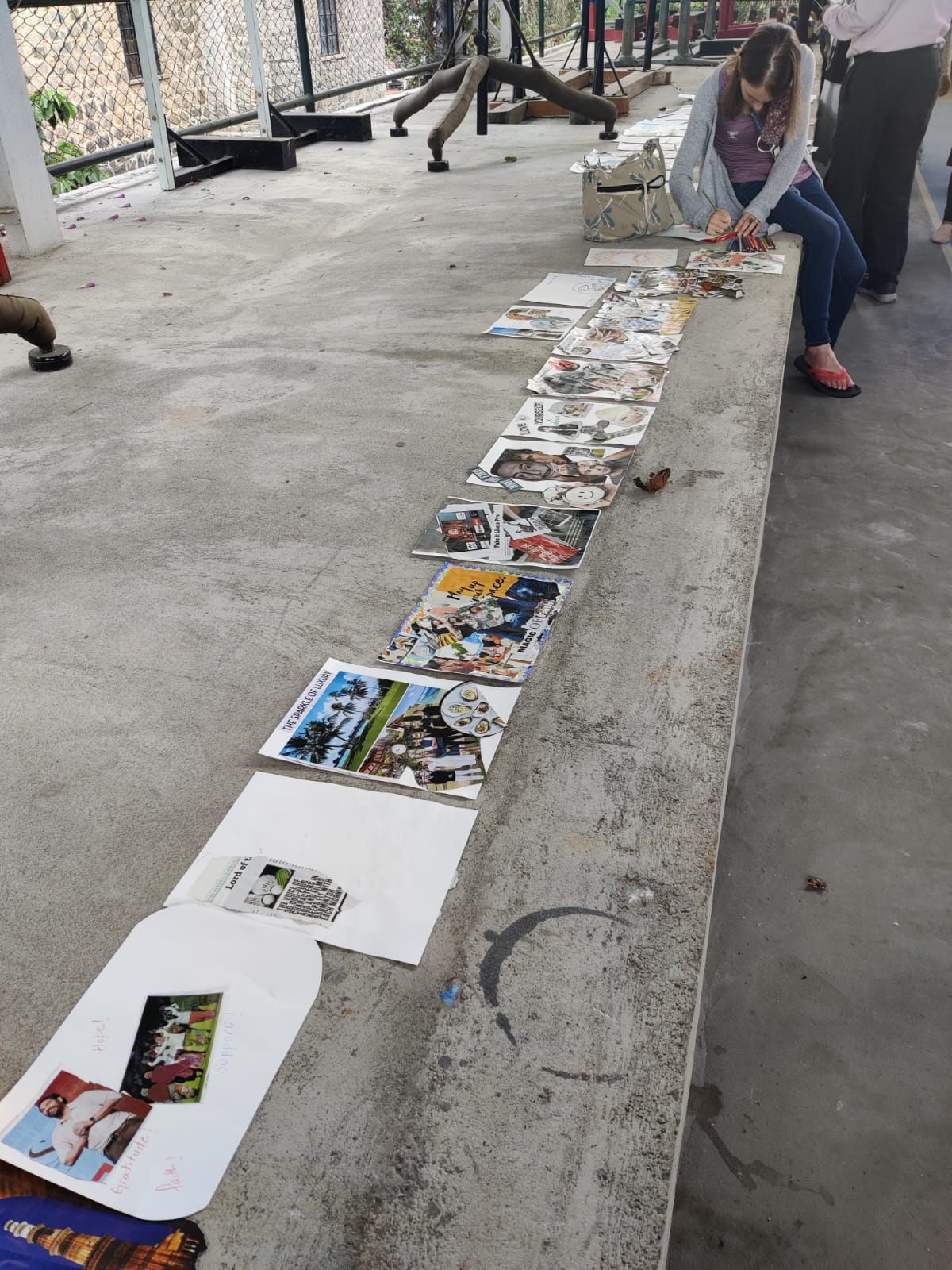
From July 14 to 18, the walls of our training space came alive with colour, movement, and imagination. Dr. Charitra Ballal’s Art Therapy Workshop was a feast for the senses—and the soul. Participants explored how art can bypass the analytical mind and give shape to emotions that often defy words. Guided exercises using image-making, colour stories, and shared reflections created a safe and vibrant space where participants discovered new aspects of their personality and journeyed together through a gallery of expressive experiences. Therapists, educators, and artists alike left with their inner creative fires reignited and their toolkits enriched.

3. Exploring Dreams through Psychodrama: Where the Unconscious Speaks

Dreams became doorways during this immersive 3-day workshop held from July 18 to 20. Led by Magdalene Jeyarathnam, this workshop helped participants bring their symbolic dream world to life through action methods. It was raw, powerful, and deeply transformative. Participants worked with dreams that had been lingering for years—finally giving them voice and resolution. The dreamwork was intimate, collective, and magical. If you ever wondered what your dreams are trying to tell you, try this workshop. Sign in when this workshop is announced.

4. Healing Transgenerational Trauma through Psychodrama

As July came to a close, we concluded one of our most powerful workshops of the season — Healing Transgenerational Trauma through Psychodrama — held on July 26 and 27.

This deeply immersive experience brought together participants ready to explore the invisible threads passed down through generations — inherited wounds, untold family narratives, and ancestral patterns that continue to echo in the present. Through the method of psychodrama, participants didn’t just observe these legacies; they stepped into them, gave them voice, and began the process of transformation in action.Time and again, this workshop proves to be one of our most sought-after spaces for those curious about the origins of emotional patterns and ready to confront the stories that shaped them. The energy in the room, the courage in the enactments, and the collective strength of the group left a lasting impact on everyone present.

Step Into What Comes Next

What sets these workshops apart is the heart behind them. Each facilitator brings in decades of experience, a deep understanding of therapeutic processes, and a creative, human touch. These are not just workshops—they are portals into personal evolution.

If you missed any of these experiences, do not worry. There is more coming. A lot more. Looking ahead, we now turn our focus to an equally significant experience — our upcoming September workshop that will explore colonial histories, cultural identity, and inherited resilience. Participants will be invited to examine the psychological impact of colonisation and the lasting imprints it leaves on individuals and communities. Through psychodramatic group processes, this workshop offers a space to not just reflect on history, but to begin the work of healing it. Stay tuned for our upcoming calendar and announcements. Whether you are a therapist, coach, educator, or someone seeking personal transformation, the Indian Institute of Psychodrama is a space where creative methods meet deep reflection—and new possibilities begin.


Let your curiosity lead. Let your story unfold. And let us walk with you.

📩 To stay updated or enquire about upcoming workshops, visit www.centerforcounselling.org
📱 WhatsApp/Call: +91 98847 00135 / +91 98847 00104
📧 Email: indianinstituteofpsychodrama@gmail.com

Friday, July 18, 2025

Why is Online Psychodrama training incomplete if there is no In-Person component?

Why is Online Psychodrama training incomplete if there is no In-Person component? 


1. Embodied Action Requires Physical Presence Psychodrama is grounded in "action-based techniques" like role reversal, mirroring, and doubling-which rely on body language, physical proximity, and spatial awareness that cannot be replicated virtually. 

2. Safe Emotional Holding Needs Group Energy In-person settings allow facilitators and peers to offer immediate, embodied containment and emotional support, which is essential during intense emotional expression or trauma processing. 

3. Spontaneity and Creativity Emerge in Shared Space Core elements of psychodrama-spontaneity, play, and creativity, flourish more naturally in a "shared physical space" where group dynamics and spontaneity evolve organically. 

4. Trust and Connection Develop More Deeply In-Person Therapeutic trust and cohesion are significantly enhanced through nonverbal cues, eye contact, and shared presence, crucial for deep personal work and risk-taking. 

5. Accurate Role Training Requires Full Sensory Feedback Learning to direct psychodrama scenes, play auxiliary egos, and use sociometry tools needs multi-sensory, real-time feedback, which is only fully possible offline.

Indian Institute of Psychodrama's Hybrid Certification Model at the Indian Institute of Psychodrama, we believe in maintaining the integrity and depth of psychodrama training. While our 80-hour online theoretical training offers flexible access to foundational concepts, we only issue certificates after participants complete an additional 70 hours of in-person training, provided complimentory. 

This ensures that all certified participants have experienced the full embodiment, group process, and spontaneity essential to psychodramatic practice. 


References 

Blatner, A. (2000). Foundations of psychodrama: History, theory, and practice (4th ed.). Springer Publishing Company. Kellermann, P. F. (1992).                                                                                    
   Focus on psychodrama: The therapeutic aspects of psychodrama. Jessica Kingsley Publishers. Dayton, T. (2005).                                                                                                                                                          The living stage: A step-by-step guide to psychodrama, sociometry and experiential group therapy. Health Communications, Inc.

Saturday, January 21, 2023

Counselling Skills training workshop - January 2023


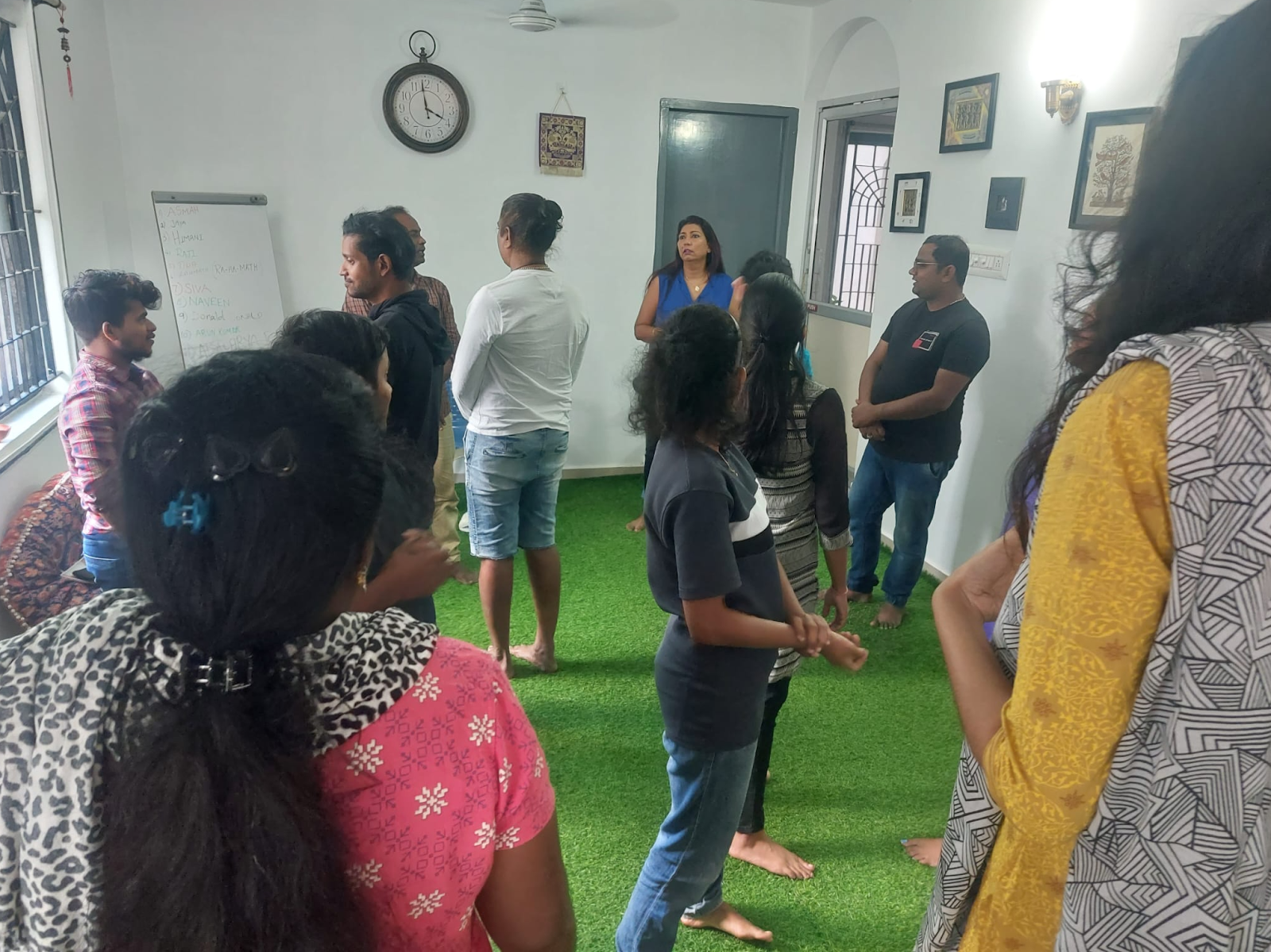
January 21, 2023 marked the end of a four-day training program by East West Center for Counselling and training for Nirangal and their collaborators. We had 12 participants. The training focused on creating a cohesive group environment and a safe space for our future counsellors among the LBBTQI+ community.


The training covered many of the basic concepts of counselling, from counselor skills and relationship building between the client and counsellor, to developing a good counseling atmosphere. Our aim was to provide the participants with the knowledge and experience they need to become successful counsellors.

The collaboration between Nirangal and East West Center for Counselling is an ongoing relationship and this training is just one of many that have been put on in the past. The training was a great success and the participants left with a better understanding of the counselling process and a stronger commitment to the profession.

Counselling is an important part of mental health care and having well-trained professionals is essential to providing quality, compassionate care particularly among the LGBTQI+ community. We are proud of the work we did with Nirangal.


Thursday, November 25, 2021

Counselling Skills training workshop - October 2021


Counselling aids one to express their emotions and it promotes well-being in the society. It facilitates individuals to be self-sufficient and to be connected with social environment and to gain insights about their feelings, thoughts and behavior about oneself. 

As there is an increase in day-to-day stress levels, and stress-related illnesses have increased – the numbers who need counselling has also increased. To match the demand for counsellors, East West Center For Counselling and Training organized a workshop for those who have the aptitude and the need to use counselling skills in their work. This was an experiential learning in counselling and it provide an opportunity for the participants to sharpen skills and also to refresh counselling ideas. 

Counselling skills training workshop was conducted on 18th, 19th, 20th, and 21st October, 2021. The timings of the workshop was from 10 am to 4 pm. A total of 12 participants took part in this workshop. various counselling skills were taught both theoretically and practically.  Mock sessions were conducted for the participants to learn and implement the skills learnt. 

Venue: Chennai     

Facilitator:

Magdalene Jeyarathnam- Certified Psychodramatist

she is an expressive arts therapist and a board certified Psychodramatist and psychodrama trainer. She works with individuals, couples and groups including family groups in India. Magdalene has more than 25 years of experience in working with addiction, HIV/AIDS, and mental health issues, she has worked with several state and central government agencies in India, she has also worked with UNICEF and WHO as consultant on various counselling projects. She is the founder of East West Center for Counselling which is an Expressive arts therapy center providing therapy services to schools, universities and organisations; She also founded the Indian Institute of psychodrama which is the first psychodrama training institute in India, since 2009. She works with corporate trainers, therapists, and those from marginalised communities in India – sex workers, prisoners, People living with HIV, LGBTQ+ communities. She is currently pursuing her doctoral study.


Wednesday, September 29, 2021

 STORY OF THE SOUL

Storytelling is an art that uses facts and narrative to convey something to the audience. Thereby, it enables the individual to embrace and own the story of their lives. Whereas, psychodrama is a deep spontaneous action method that helps the individual to gain insight into their lives. 

Thus, the combination of the profound personal engagement in storytelling, and the equally profound exploration of image and character uncovered through psychodrama made this 4 session workshop unique and significant. The workshop was conducted on 6th,13th, 20th, 27th of August 2021 (Fridays) at 6:00pm to 8:00pm. It was facilitated by Laura Simms and Magdalene Jeyarathnam.

 Laura Simms is a Storyteller, Writer, Humanitarian, the Artistic Director of the Hans Christian Andersen Storytelling Center in NY and also the founder of The Center for Engaged Storytelling (new). 

Magdalene Jeyarathnam is a Certified Psychodramatist, Expressive Arts Therapist and the Director of the Indian Institute of Psychodrama. she is also the Director of the East West Center for Counselling and Training (an Expressive Arts Therapy Center based in Chennai, India); and a co-founder of the Expressive Arts Therapy Association of India.


Monday, July 12, 2021

Teachers retreat workshop at Kodaikannal International School - 8th July 2021

 East West Center for Counselling and Training in collaboration with Kodaikannal International School conducted a teachers retreat workshop using Expressive Arts Therapy. This workshop was held at KIS campus on the 8th of July 2021. 


Wednesday, June 30, 2021

India’s LGBTQ struggle and breaking down diversity barriers- 2nd July 2021


 India’s LGBTQ struggle and breaking down diversity barriers

India – ancient or modern have acknowledged sexual orientation exercisable by an individual though the same have been dogged with struggles of discrimination and criminalization. However, these are changing times and there is an acknowledgement that sexual orientation is not a choice and therefore those with different orientations have a right to live just like anyone else, which is part of the right of life. Multinational research firm IPSOS LGBT+ Pride 2021 Global Survey released this year reflects the changing nature of the Indian Population where sexual orientation reflects identification of at least 2% of the population to genders other than male or female and these include transgender, non-binary, non-conforming, gender-fluid and others. Further the report reflects that about 3% of the Indian Population identify as homosexual and 9% identify as bisexual with 1% as pan sexual and 2% identifying themselves as asexual. Hence we are looking at a population of 17%, which is no mean number, identifying themselves with different genders and sexual orientations. This 17% of the population have had to hide or deny or evade their sexual preferences and identity as society might call them unusual or not in conformity with the ordinary. This struggle with their inner selves has led to several battles with authority, selves society and family, one of which recently culminated into a victory of sorts with the Supreme Court of India decriminalizing Homosexuality and considering any discrimination or criminalization due to sexual orientation to be unconstitutional and an infringement of the rights to autonomy, intimacy, and identity and above all the fundamental right to privacy. The Supreme Court also directed the Government to take all measures to properly broadcast this message among the public to eliminate the stigma members of the LGBTQ community face.

Today CII-IWN bring in this very important discussion where though the judgment did open a world of possibilities for this group, the societal acceptance has not changed. The  discrimination continues and acceptance of sexual orientation to be a right by choice and preference is not forthcoming. Individuals struggle and hesitate to come out or freely live their sexual orientations and paths or support partners they have come to love. This hesitation is more identifiable or visible at the workplace. Today as the discussion on diversity has taken greater proportions and there is recognition of the fact that workplace has no place for one section or only a singular population to be visible, this dialogue or discussion on diversity needs to encompass that diversity is about humanity, it is about visibility and its about acceptance that an individual is known for their accomplishments or talents, they be identified for their work and their paths and the same should have little to do with gender, sexual orientation, class or caste.