Showing posts with label Counselling training in chennai. Show all posts

Thursday, March 15, 2012

Basic Counselling Skills course

Basic Counselling Skills training course

Dates - April 16 to 21(Monday to Saturday)

Venue - Nungambakkam, Chennai

Who can attend this training?

Our objective is to train individuals and organisations who are already implementing counselling services.

This training will be helpful as a refresher course for those who have been trained before. Anyone who has the aptitude and training in counselling. 

The Basic counselling skills course is to give people a practical exposure to counselling. Many people have a degree/ diploma or have an academic training in counselling, but do not know the practical application. 


The topics covered will be

Basic skills in counselling,
Approaches in counselling(individual and group therapy)
Qualities of a counsellor,
Stages in Counselling,
Planning session goals,
Boundaries and ethics.

At the end of the training participants will receive a certificate and feel more confident because of the hands on experience in practice.

How do we train?

We use participatory learning techniques - Role plays, exercises, case discussions, Group discussion, video presentations and discussions.  

12 participants per batch. 

Last day for registration is March 26, 2012.

Course Fee - Rs 10,000/=

If you are interested in the course, Please send a brief resume about yourself and why you would like to do this course to Ms Rajeswari

For further details - 9884700104/ 42080810 between 10 AM to 5 PM

Email - centerforcounselling@gmail.com

Thursday, June 9, 2011

Certificate courses July 2011 to November 2012

Art therapy Certificate courses


For the first time in India, East West Center for Counselling, Chennai is introducing Art Therapy Certificate Courses

Profile of the Trainer Melba Thorn USA

Melba Thorn  M.A. MFTI, Artist BFA, Rietveltd Academy, Amsterdam. M.A. Marital and Family Therapy specializing in “Clinical Art Therapy” at Loyola Marymount University in Los Angeles. She  has used Art therapy in a variety of settings such as Substance Abuse, Cancer survivors support groups, Victims of crime, PTSD treatment, Vocational Burnout, Chronically Mentally Ill clinics as well as Individual and Family Therapy.


Beginning this July, 2011 (on weekends, month long courses) we bring you art therapy tools and techniques in working through

1.     Trauma,
2.     Grief and loss,
3.     Substance abuse,
4.     Managing vocational burn out,
5.     Couple and marriage therapy,
6.     Depression and anxiety
7.     Behavior modification training for school counsellors/ parents
8.     Personal development

A one year Diploma course in Art therapy from September 2011 to Aug 2012

Only limited seats are available per course.

For more information contact:   9884100135/ 42080810

Email- info@centerforcounselling.org
www.centerforcounselling.blogspot.com

1.    Art therapy for people experiencing trauma weekends or week days - You choose

a) Date: 4 Weekends (beginning 16 July to 7 Aug) and 
b) Dates: 
3,4 (Wed, Thurs) - Using various art techniques
10,11(Wed, Thurs) - Introduction to art therapy
17,18 (Wed, Thurs) - Art therapy in Trauma 
24,25 (Wed, Thurs) - Art therapy in Trauma   
31 Aug, 1 Sept (Wed, Thurs) - (Art therapy in Trauma )


Fees: Rs 15000/=

This one month long course will educate participants to  apply practical strategies to your work with children and adults who have experienced a wide variety of traumatic events. This course is open to mental health and healthcare professionals and students; no previous experience with art therapy is required

The course consists of a series of presentations, interactive discussions and table group activities designed to support participants learning of key concepts, knowledge and skills required to implement trauma art therapy treatment. 


Models of trauma art therapy are outlined as well as using art in the trauma narrative process . 


Students will report to class 10 days in all and will be assigned a project which needs to be completed with one client. Students will complete 60 hours classwork and 20 hours of practical work including preparation and writing up the project, in all the students will complete 80 hours.

·      The purpose of the trauma art therapy training is to prepare counsellors/ therapists to provide for and respond to 


  •      The psychological needs of people who have experienced trauma.
  •      Support opportunities for storytelling thorough art created.      
  •      Encourage and provide creative choices for open, self expression.
  •      Create a safe, inviting, and structured environment for clients to express through art free of judgment.
  •       Learn to help clients validate their experience, educate normalize trauma reactions, promoting emotional expression, coping skills and stress management.
        
Learning Outcome: Participants will be able to

  •       Identify the continuum of trauma events and experiences
  •      Utilize art in the trauma narrative process
  •      Describe the unique qualities of art in the treatment of trauma
  •      Identify the application of trauma art therapy in various setting·       
http://anithawrites.blogspot.com/2011/07/art-therapy-workshop-day-1.html


2.    Clinical Art therapy course

Date: September 2011 to August 2012 - One year Programme
Fees: Rs 50,000/=


This course will explore practical strategies to engage with families, couples, with children and adults in therapeutic environment. We will explore issues like anger management, substance abuse, adjustment disorder, effective communication,grief and loss, stress management and vocational burnout. This will be a hands on training where students will have to work in therapeutic settings and submit art work completed with clients and families to qualify for the certificate. This course is open to mental health and healthcare professionals and students. No previous experience with art is required. 

4.    Expressive Arts therapy course

Date: December 2011 to November 2012 - One year Programme
Fees: Rs 60,000/=


This course content will give exposure to music therapy, psychodrama, play back theatre, movement therapy, storytelling, counselling/ psychology component compulsory, expressive art therapy. Participants will learn how to use art, clay, play, theatre, acting, movement, in therapeutic settings. Participants will have hands on training and will have to complete project work and assignments to qualify for the certificate. The trainers for this course - Dr Herb Propper, Jennie Kristel, Monique McGrath, Dr Eric Miller, Dr Veena Eavardoss and Magdalene Jeyarathnam


Dec - 12 to 21 , 2011(10 days)

  1. Psychodrama - Dr Herb Propper(USA)
  2. Music therapy - Monique Mcgrath (Canada)
  3. Ethics, Boundaries, Confidentiality Indian context - Magdalene Jeyarathnam(India)
March 2012 dates not fixed yet (10 days)
  1. Submission of assignments and sharing of experiences
  2. Playback theatre - Jennie Kristel (USA)
July 2012 dates not fixed yet (10 days)
  1.  Submission of assignments and sharing of experiences
  2. Storytelling - Dr Eric Miller(India)
Final submission of assignments in November and certificates will be issued only on completion of the projects in December 2012. We are preparing you for actually doing these therapies.

Total class hours will be 180 hours
Project (3) - 70 hours
Total - 250 hours 


The training methodology is experiential learning using various art techniques such as: Art work. Clay, Collages, Group Discussion, Games and Exercises, Case studies, Role -Play Presentation, extensive mentoring from practioners and Testimonies.

Venue: Nungambakkam, Chennai, 
Time: 10 AM to 4 PM
No of participants limited for all courses

For further details:

Contact - 9884100135/ 9884700164/ 42080810
email - info@centerforcounselling.org/ 


Thursday, August 19, 2010

APAC training


Follow up Counseling Toolkit Training workshop for APAC ART counsellors:

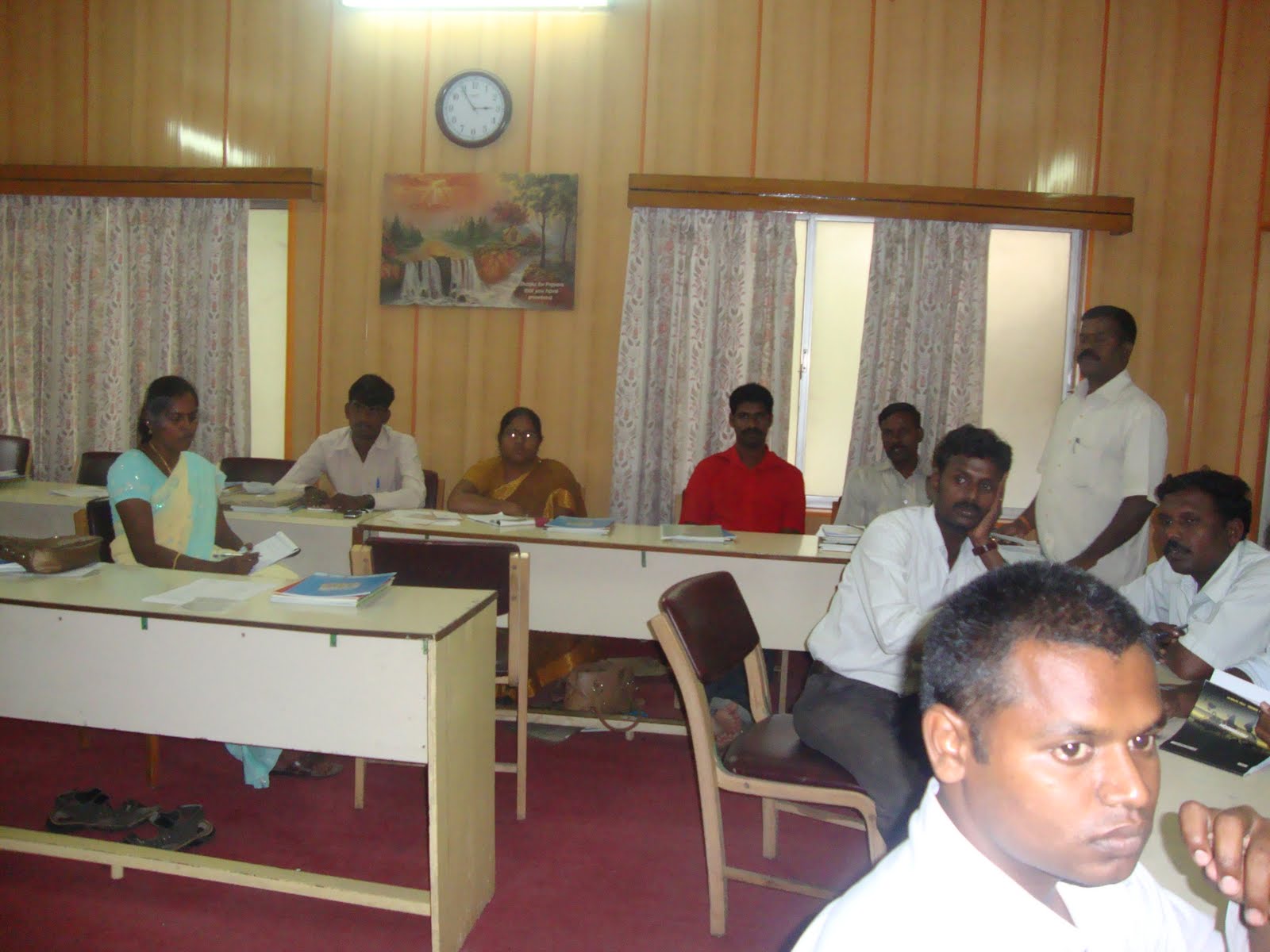
We are doing counselling training for the first batch of 15 counsellors from different APAC funded HIV projects in Tamil Nadu. The training is on Follow Up counselling toolkit. This training is for 6 days and the counsellors are learning different tools they could use while working with clients.The toolkit consists of 6 handbooks, 6 flipcharts and a video CD.

                                                    Batch Details
        Batch 1                                                                                        Batch 2

Date         :       16/08/2010 to 20/08/2010                       Date            :      30/8/2010 to4/9/2010     
Venue      :      Chennai                                                   Venue          :      Tiruchi
Partcipants:      15                                                          Participants:       17

Learning to use the video
Using this video in explaining a concept
Lots of doubts to be clarified
Lecture sessions
Group work needs facilitation

Using the trigger video

We drummed to energise and we felt great

Tuesday, April 7, 2009

Trainings in September

Center for Counselling will be conducting 

A)  Two week training on Psychodrama in September. The trainer will be Dr Herb Propper PhD, TEP, certified trainer, educator and practitioner from the USA.

What is PSYCHODRAMA?

Enhacing individual and group creativity …

Sharing our inner world with others …

Opening pathways to self-directed change …

Exploring past, present or future relationships…

"Role-playing comes before the emergence of the self --"

       - Dr. J. L. Moreno, creator of Psychodrama, Sociometry and Group Psychotherapy


Psychodrama uses our innate capacity for role-playing to investigate our lives in a mutually supportive environment, to reexperience and change the past, to affirm our strengths, to try out future alternatives and to change what we choose.

It requires no experience or training in formal theater.

Psychodrama draws on the spontaneous and creative process of the group to help each other discover satisfying solutions to individual and collective situations.  It gives us insights into the underlying dynamics of a group, to see the ways people are connected to one another, and to choose our companions or colleagues with increased mutual satisfaction.  It offers opportunities to take more responsibility for and control over our lives, individually and collectively.

Psychodrama is a means of exploring our lives together with other people in spontaneous role-playing action.  It is therapeutic in the widest sense, providing us with opportunities to investigate and integrate body, mind and spirit, and to connect more deeply with others than we often do in our normal day-to-day life.  A fundamental goal of psychodrama is to help us activate and expand our individual and collective spontaneity and creativity.

What is spontaneity in psychodrama?

In psychodrama, being spontaneous is not about acting impulsively or blindly, without thought or consideration for others.  Instead, spontaneity is defined in practical terms as being able to create "a new response to an old situation" or "an adequate response to a new situation," where adequate is measured by actions that satisfy both our own needs and those of the persons with whom we interact.  Using various active role-playing methods, we have opportunities to practice a variety of responses to a person or situation.  We can also experience the impact of our responses on others by stepping into their shoes and feeling the effects of the way we express ourselves or ask for what we need.  Through the creative contributions of others who are participating in the role-playing, we receive a wider perspective on our own life.

Trainer Biography: 


Herb Propper, Ph.D., T.E.P. is a Trainer Educator Practitioner of Psychodrama, Sociometry and 

Group Psychotherapy, certified by the American Board of Examiners.  He has 30 years of 

experience in the field.  He is Director of Celebrations of the Soul Center for Psychodrama, 

Sociodrama and Sociometry in Vermont, USA, in private practice as therapist, trainer and 

consultant. 


Herb is a lifetime member and fellow of the American Societry of Group Psychotherapy and 

Psychodrama (ASGPP).  He has presented numerous workshops at conferences of the ASGPP 

and its affiliated New England chapter. 


Since 2003 he has been a lead trainer for the National Therapeutic Theatre Workshops of 

Bangladesh, and is also a member of the Bangladesh Therapeutic Theatre Institute. 


He has published articles on sociodrama, psychodrama in theater work and role-playing in 

education in The British Journal of Psychodrama and Sociodrama, The Journal of Group 

Psychotherapy, Psychodrama and Sociometry,and The Internaional Journal of Action Methods.  

He has also contributed a chapter on uses of psychodrama in education to Psychodrama in the 

21st Century.


B) Five day training on Art Therapy in November- The trainer will be Jen Kristel, Expressive Arts Therapist, Playback Theatre Director/teacher

Participants will learn aspects of Art as Therapy:

Basic history of Art therapy

Integrating different arts as therapy

Methods of assessment

Color symbol

Symbology of imagery

View case studies

The value of art as diagnostic tool

Arts used in different clinical areas, in western culture

Define, assess and develop concept of using the arts as therapy in Indian culture

Experiential work both individually and group oriented.


C)  Five day training on Playback theater also in November. The trainer will be Jen Kristel, Expressive Arts Therapist, Playback Theatre Director/teacher

Playback, What Is It?


An audience gathers.  After introducing the company, the conductor asks for a story from the audience .A person tells a story about something in their life. The actors receive roles. The musicians begin playing and the action starts. Using theatre improv, movement, sound and spoken word, this person’s story comes alive for all to see. After, the conductor asks “Did that capture the essence? The teller nods and goes back to the audience. A new story is told, and the thread of stories continues as each person in the room, connects to each other and to the shared moments.

The process of Playback is deceivingly simple. At one level, we are playing back a person’s story from his/her life. Yet, the act of creating the safety that allows anyone to tell the story is important, as well as the ability to listen deeply, not so much with our ears, but from our heart to the tellers story, and bear witness to it through the enactment as a way of giving them a gift. As an actor, we receive these stories as a gift, and it is important then to hand back to the individual as well as to the audience as a whole. The conductor holds a presence similar to that of a “shaman,” needing to pay attention to the subtle as well as broad dynamics within the audience as well as the connection between the actors and the audience. There is a balance of art, social awareness and ritual that needs to be present in order for a Playback performance to go well. In Playback as well, one can pay too much attention to any of these areas, and the other areas might lack. As audience members become used to what Playback is about, for many, also become accustomed to the ritual and look forward to it. Many an audience member will come to a performance regularly, because they understand that when they do, there is a basic ritual that they will know- one which includes the ability for them to tell a story of their own, from their own life, and see it enacted.

Playback began over 30 years ago by Jonathan Fox and the original Playback Theatre troupe. It is now done with over 350 companies in 50 countries. Each company, and in each country does Playback in their own way, yet the ritual of Playback remains the same. Whether in a hospital setting, a prison, or an open performance Playback supports people in connecting with eachother through personal story, creating community and supporting people in finding their voices for change, acknowledging their dreams, developing support networks through shared experience.

An evening of Playback can elicit laughter, tears and “ahas” all within a few minutes of each other.

“People need to tell their stories. It’s a basic human imperative. From the telling of our stories comes our sense of identity, our place in the world, and our compass of the world itself.”
-Jo Salas, original member of Playback Theatre

Playback Theatre brings “theatre back from the domain of entertainment to its earlier purpose of preserving memory and holding the tribe together.”
-Jonathan Fox, Founder of Playback Theatre

All the above training will have very limited participants. 
Dates will be announced later this month.